01
SIZE REDUCTION
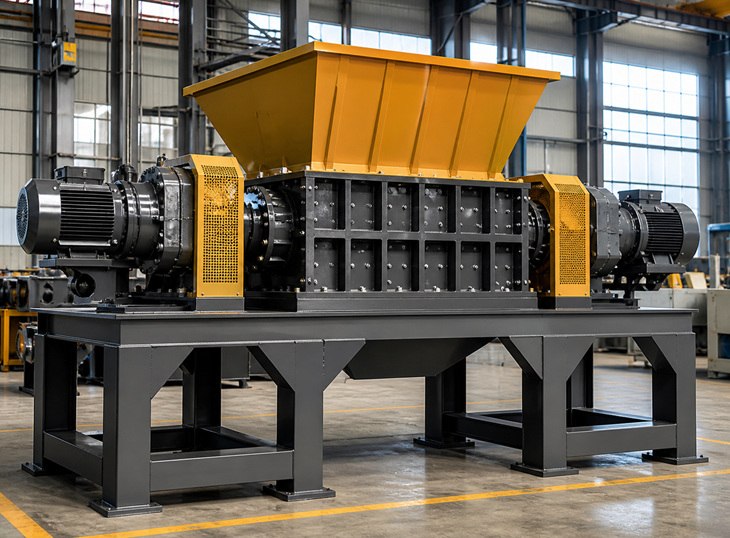
Industrial Shredders
Single and twin-shaft systems for wood, plastic, tyres, MSW and metal.
View product page ↗ Get a proposal ↗
Tell us the material, required output and destination. Our Zhengzhou team can supply an individual machine or help put together the full processing line.
Buying separate machines is easy. Making them feed one another reliably is the harder part.
We look at the full route—from receiving and size reduction to drying, forming, dust control and packing—so capacities and transfer points make sense together.
See how we prepare a proposal ↗Choose a category, then send us your material details for a model recommendation.
Single and twin-shaft systems for wood, plastic, tyres, MSW and metal.
View product page ↗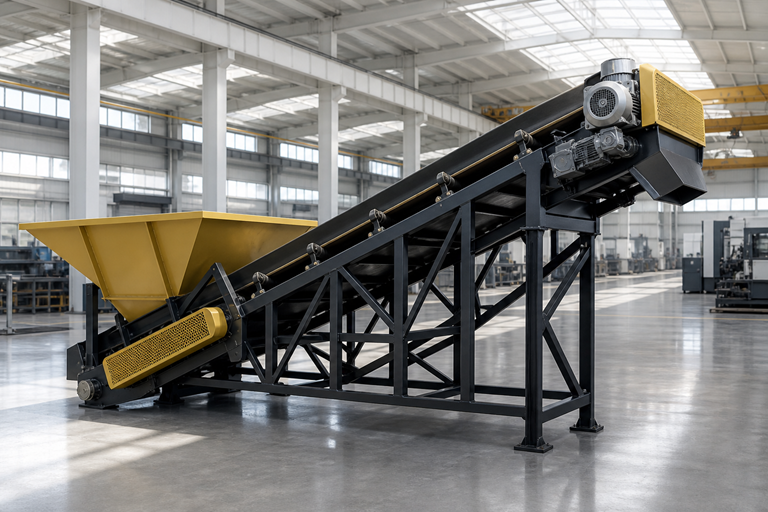
Belt, chain and screw conveying systems built for continuous duty.
View product page ↗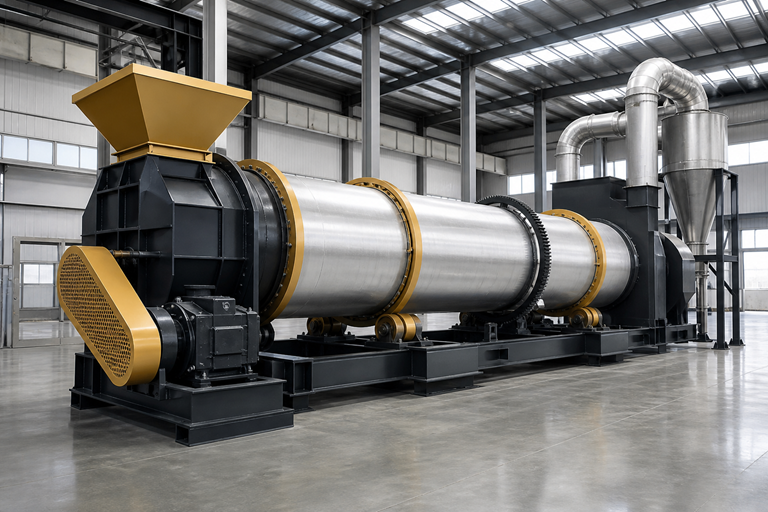
Efficient rotary drying for biomass, sawdust and agricultural residues.
View product page ↗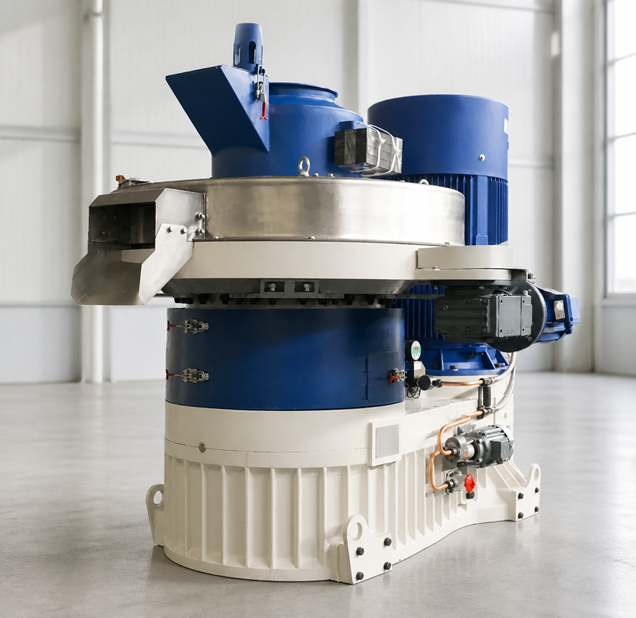
Integrated lines from chipping and drying through pelletizing and packing.
View product page ↗Start by showing us what you have now and what you need to produce. That usually narrows the equipment choice quickly.
Pallets, logs, branches, furniture and demolition timber
Shred · Chip · Mill · Pellet → 02Rice husk, straw, bagasse, corn stalk and palm waste
Dry · Mill · Pellet · Carbonize → 03Rigid plastic, film, woven bags and mixed commercial waste
Shred · Convey · Separate · Bale → 04Passenger, truck, OTR tyres and production scrap
Pre-shred · Granulate · Separate → 05Light metal, cans, profiles, appliances and mixed scrap
Shred · Sort · Compact → 06Wood chips, coconut shell, bamboo and nut shells
Dry · Carbonize · Cool · Pack →These are broad planning ranges, not promised outputs. Actual capacity depends on the material, moisture, feed size and required finish.
Send your material details →| Equipment | Typical duty | Capacity range* | Key input |
|---|---|---|---|
| Twin-shaft shredder | Primary size reduction | 1–30 t/h | Material + output size |
| Wood chipper | Logs & forestry waste | 2–25 t/h | Log diameter |
| Hammer mill | Fine biomass grinding | 1–15 t/h | Moisture + screen size |
| Rotary dryer | Moisture reduction | 1–20 t/h | In/out moisture |
| Pellet plant | Biomass densification | 1–20 t/h | Feedstock + pellet spec |
| Biochar plant | Thermal conversion | Project-specific | Feedstock + end use |
Send material photos, a realistic hourly target, the finish you need and your destination. We ask follow-up questions before suggesting a machine or line.
We review size, moisture, bulk density and contamination.
We choose the necessary stages and check how material moves between them.
You receive the proposed equipment, utilities, options and exclusions for review.
Documentation, inspection, shipping and commissioning support follow the agreed contract.
A representative wood-waste processing configuration designed for stable output in high-humidity conditions. Final results depend on tested feedstock and site conditions.
The contract can define manuals, electrical drawings, packing lists and other documents needed for the destination.
Factory checks, inspection records and loading supervision can be included when agreed in the order.
Available support can include remote troubleshooting, commissioning guidance, operator training and a recommended spares list.
Straightforward notes on machine selection, process limits and the information suppliers need from buyers.
Voltage standards, documentation, factory inspection, shipping and commissioning — the parts of an export order that decide whether equipment actually works on arrival.
Read article →Feed opening, cutter geometry, torque, motor power and output screen — what actually controls capacity?
Read article →From chipping and moisture control to milling, conditioning, pelletizing, cooling and packing.
Read article →A few clear details at the start prevent a lot of wrong assumptions later.
Tell us the raw material, current size, moisture, contaminants, required capacity, target product or output size, operating hours, electricity standard and destination country.
Yes. The intended scope can include feeding, shredding or chipping, conveying, drying, milling, pelletizing or carbonization, cooling, dust collection, controls and packing.
Selection depends on material toughness, bulk density, input dimensions, contamination, required throughput and final particle size. A representative material test is recommended for difficult feedstocks.
Voltage, frequency, motor protection, control components, labeling and documentation can be configured against the requirements agreed during engineering.
Commissioning scope can range from remote guidance and installation documentation to on-site supervision and operator training, subject to the project contract and destination.
Photos or a short video are useful. Add the required hourly output, final product and destination country, and we will tell you what else is needed.