
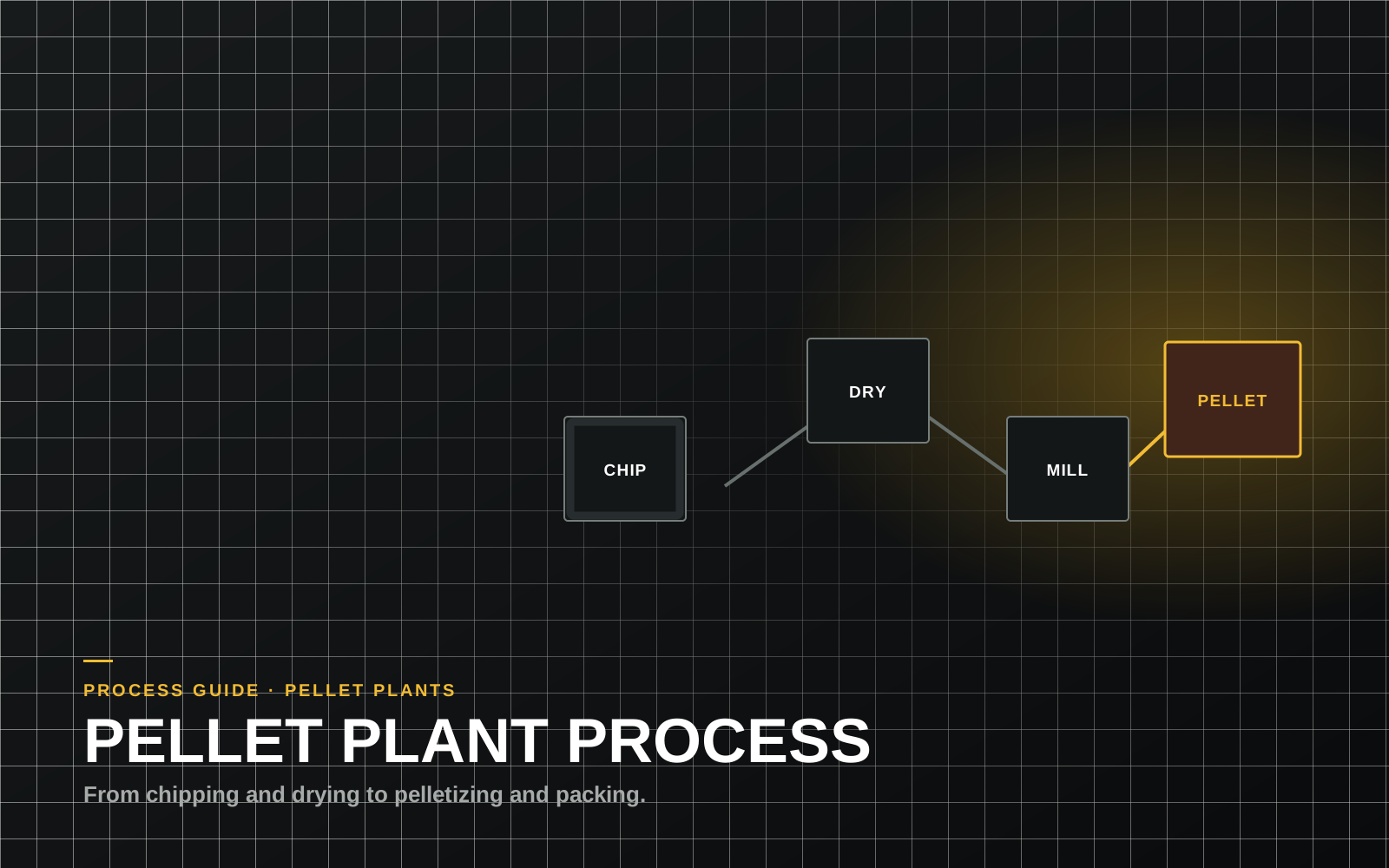
A pellet plant looks simple on a flow chart — chip, dry, mill, pelletize, cool, pack. Six boxes, six arrows. What the chart doesn't show is that every box depends entirely on the one before it doing its job properly. Get the drying stage wrong and no amount of die pressure downstream will fix the pellets you end up with.
It starts with getting the size down
Logs, branches, forestry residue, sawmill offcuts — whatever the raw material, it gets chipped first. This isn't just prep work; the chip size set here determines how evenly the material dries and mills later on.
Moisture is the real variable, not tonnage
Pelletizing only works within a fairly narrow moisture band. A rotary dryer gets material there, and it's sized around something people often overlook: not how much wet feed comes in, but how many kilograms of water actually need to evaporate per hour. That's the number that matters.
Grinding for consistency, not just fineness
A hammer mill's job is to make every particle roughly the same size. Skip this step or run it poorly, and it shows up two stages later as unstable pellets and mill blockages — inconsistent particle size is one of the most common culprits.
Where the pellets actually form
Conditioned material gets forced through a ring die under pressure and friction heat, and that's what produces the dense cylindrical pellets you're after. Which die, and how the feed is conditioned beforehand, depends heavily on the specific feedstock's fibre content and moisture behaviour — there's no universal setting.
Cooling and packing — the part people rush
Pellets leaving the mill are hot and structurally soft, not finished yet. A counterflow cooler brings them down to a stable temperature, a screener knocks out the fines, and only then are they ready to bag or load in bulk.
Why we look at the whole line, not just the mill
Every stage here leans on the one before it. That's why, before recommending a single machine or a full production line, we walk through chipping, drying, milling, pelletizing, cooling and packing together — not just the part that looks impressive in a brochure.